You’ve probably seen countless detox drinks, cleanses, and diets promising to “flush toxins” from your body. But here’s something important to know:
Your body already has its own highly effective detoxification systems.
Your liver and kidneys process and eliminate many waste products, while your lungs, digestive system, and skin perform their own essential functions. No individual food can “cleanse” an organ, but a nutritious diet can provide the nutrients these systems need to work normally.
Here are some everyday foods that can support overall health. 🍎🥬
🫀 1. Support Your Liver
Your liver performs hundreds of important functions, including processing nutrients, medications, alcohol, and waste products.
Foods to consider:
Beets 🥬
Beets contain fiber, folate, and plant compounds called betalains, which have antioxidant properties.
Carrots 🥕
Carrots are rich in beta-carotene, which your body can convert into vitamin A.
Apples 🍎
Whole apples provide fiber, vitamin C, and beneficial plant compounds.
💡 Tip: Instead of relying on “liver detox” juices, focus on a balanced diet and limit excessive alcohol consumption.
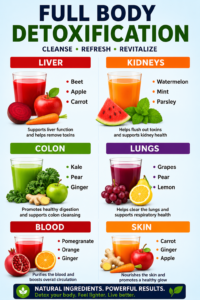
💧 2. Support Your Kidneys
Your kidneys filter your blood, regulate fluid and electrolyte levels, and remove many waste products through urine.
Hydrating foods:
Watermelon 🍉
Watermelon is mostly water, making it a refreshing way to contribute to overall hydration.
Cucumber 🥒
Another water-rich food that can be easily added to salads and snacks.
Fresh Mint 🌿
Mint can add flavor to water and meals without added sugar or excess sodium. However, it has not been proven to “cleanse” the kidneys.
💡 Tip: Staying adequately hydrated is generally more important for healthy kidney function than drinking special detox beverages.
People with kidney disease may need specific limits on fluids, potassium, phosphorus, or other nutrients, so individualized medical advice is important.
🥬 3. Support a Healthy Gut
Your digestive tract is home to trillions of microorganisms collectively known as the gut microbiome.
A varied, fiber-rich diet can help support digestive health and beneficial gut bacteria.
Foods to consider:
Kale 🥬
Provides fiber along with vitamins and minerals.
Pears 🍐
Whole pears are a good source of dietary fiber, particularly when eaten with the skin.
Ginger 🫚
Ginger has a long history of culinary use and may help with certain types of nausea and digestive discomfort.
💡 Tip: Beans, lentils, vegetables, fruits, and whole grains are excellent ways to increase dietary fiber gradually.
🫁 4. Support Your Lungs
Despite popular claims, foods cannot literally “clean” smoke, mucus, or pollution from your lungs.
However, eating plenty of fruits and vegetables provides nutrients and antioxidants that contribute to overall health.
Nutritious choices include:
Grapes 🍇
Provide antioxidants and beneficial plant compounds.
Pears 🍐
Offer fiber, vitamin C, and other nutrients.
Citrus Fruits 🍋
Lemons, oranges, and grapefruit provide vitamin C, which contributes to normal immune function.
🚭 Most important: Not smoking—and avoiding secondhand smoke when possible—is one of the most meaningful things you can do to protect your lungs.
❤️ 5. Support Your Heart & Circulation
You don’t need special foods to “purify” your blood. Your liver and kidneys continuously process substances and remove waste from your bloodstream.
But certain foods fit nicely into a heart-healthy eating pattern.
Pomegranate ❤️
Contains polyphenols and other antioxidant plant compounds.
Oranges 🍊
Whole oranges provide vitamin C, folate, potassium, and fiber.
Ginger 🫚
A flavorful ingredient that can help add variety to a nutritious diet.
💡 For cardiovascular health, focus on your overall eating pattern rather than any single “blood-cleansing” ingredient.
✨ 6. Nourish Your Skin
Your skin is your body’s largest organ and an important protective barrier.
Although your skin isn’t a major “detox organ,” good nutrition can help maintain normal skin health.
Foods to consider:
Carrots 🥕
Beta-carotene can be converted into vitamin A, which is important for healthy skin.
Apples 🍎
Provide fiber, vitamin C, and plant antioxidants.
Colorful Fruits & Vegetables 🌈
Eating a variety of colors helps provide different vitamins, minerals, and phytochemicals.
And don’t forget adequate hydration, sleep, and sun protection.
🌿 Simple Ways to Support Your Body Every Day
You don’t need an extreme cleanse. Instead:
✅ Eat a variety of fruits and vegetables
✅ Choose whole grains and fiber-rich foods
✅ Include healthy sources of protein
✅ Drink enough water for your individual needs
✅ Exercise regularly
✅ Get adequate sleep
✅ Avoid smoking
✅ Limit alcohol
✅ Keep added sugars and highly processed foods in moderation
And remember: “organic” isn’t required for a nutritious diet. Conventional fruits and vegetables can also be healthy choices. Washing fresh produce before eating is a sensible habit.
🌈 The Bottom Line
There is no scientifically proven food that can magically “detox” your entire body.
Fortunately, you don’t need one.
Your body is already equipped with sophisticated systems that process and eliminate waste every day. Rather than chasing quick detoxes or restrictive cleanses, give those systems consistent support with nutritious food, adequate hydration, physical activity, sleep, and other healthy habits.
Small habits practiced consistently can matter far more than a short-term detox. 💚
⚠️ Health Note: This content is for general educational purposes and is not a substitute for professional medical advice. People with kidney, liver, heart, digestive, or other medical conditions should discuss major dietary changes with a qualified healthcare professional.
💬 Which of these healthy foods do you eat most often?