🚶 What Happens to Your Body When You Walk Every Day?
Walking may be one of the simplest forms of exercise, but its benefits can add up over time. You don’t need an expensive gym membership or complicated equipment—just a comfortable pair of shoes and a place to move.
You may have seen posts claiming that very specific things happen after exactly 1, 5, 10, or 30 minutes of walking. The reality is more nuanced. Your body’s response depends on your pace, fitness level, health, what you’ve eaten, and many other factors.
Still, even a short walk can be worthwhile. Here’s what the research suggests about making walking a regular habit. 👇
⏱️ After Just a Few Minutes
As you begin walking, your muscles need more oxygen and energy. Your heart rate may increase and blood flow adjusts to meet those demands.
Even a brief walk is an opportunity to break up prolonged sitting, which is particularly useful if you spend much of your day at a desk.
You may also notice that you simply feel more awake and refreshed afterward.
😊 Around 5–10 Minutes: A Mental Reset
A short walk can provide a change of environment and a break from work, screens, or everyday stress.
Physical activity is associated with benefits for mood and mental well-being, although it isn’t accurate to say that stress hormones automatically fall after an exact number of minutes.
A 5- or 10-minute walk still counts.
🍽️ Around 10–15 Minutes: Consider Walking After a Meal
One particularly useful time to walk is after eating.
Light activity after a meal can help your muscles use glucose and may reduce the rise in blood sugar that occurs after eating.
This doesn’t mean a 15-minute walk will automatically “lower your blood sugar” by a particular amount, and walking isn’t a replacement for diabetes medication or medical care.
But a short post-meal walk can be a healthy habit for many people.
❤️ Around 20–30 Minutes: Your Heart Gets a Workout
Maintain a brisk pace and walking becomes moderate-intensity aerobic exercise for many adults.
Over time, regular brisk walking can contribute to better cardiovascular fitness and help support healthy blood pressure, cholesterol levels, and blood sugar management.
A useful rule of thumb for moderate intensity is the talk test: you should be able to talk, but singing would be difficult.
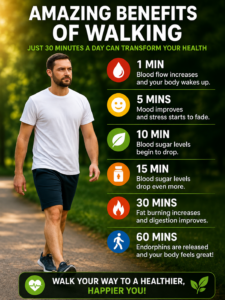
🔥 Does Walking for 30 Minutes Start “Burning Fat”?
Your body doesn’t suddenly switch on fat burning at the 30-minute mark.
You use a mixture of carbohydrates and fat for energy throughout physical activity. The proportions change depending on exercise intensity, duration, fitness, and other factors.
Walking can certainly contribute to weight management because it uses energy, but losing body fat depends on your overall energy balance and long-term habits, not reaching a magic number of minutes.
🧠 Around 30–60 Minutes: Time for Your Mind
Longer walks can provide valuable time away from everyday distractions.
Many people find walking helpful for clearing their thoughts, thinking through problems, or simply decompressing.
Physical activity can also influence brain chemicals involved in mood, but claims that dopamine automatically rises after exactly 60 minutes oversimplify what happens in the brain.
You don’t need to walk for an hour to benefit.
🦴 Regular Walking Helps More Than Your Heart
When walking becomes a consistent habit, the benefits can extend throughout your body.
Regular walking can help:
❤️ Improve cardiovascular fitness
🫁 Build endurance
🦵 Strengthen muscles involved in walking
🦴 Support bone health as a weight-bearing activity
⚖️ Assist with healthy weight management
🍬 Support blood sugar control
😴 Promote better sleep
🧠 Support mood and mental well-being
🪑 Reduce the amount of time you spend sitting
The key word is regular. One extremely long walk can’t replace consistent movement throughout the week.
🎯 How Much Walking Should You Aim For?
For substantial health benefits, U.S. physical activity guidelines recommend that adults generally work toward at least 150 minutes of moderate-intensity aerobic activity per week, along with muscle-strengthening activities on at least two days per week.
That might look like 30 minutes of brisk walking five days a week.
But if you’re currently inactive, don’t let that number discourage you.
Start with 5 or 10 minutes. Add a few minutes as your fitness improves. Several shorter walks can also contribute to your overall activity.
🌳 Walking Outdoors Can Be an Added Bonus
Walking through a neighborhood, park, or other outdoor space gives you an opportunity to step away from screens and change your surroundings.
For some people, combining movement with time outdoors can be particularly enjoyable and relaxing.
Just remember basic precautions such as staying hydrated when needed, dressing appropriately for the weather, and being visible around traffic.
🌿 The Bottom Line
Walking doesn’t need to be fast, long, or complicated to be valuable.
And your body doesn’t operate according to a stopwatch where a new health benefit suddenly appears at minute 5, 15, 30, or 60.
What matters most is moving regularly and building a routine you can maintain.
A 10-minute walk today is better than waiting for the “perfect” day to exercise for an hour.
So put on your shoes, step outside, and start where you are. Every walk is another opportunity to invest in your long-term health. 🚶♀️❤️
⚠️ Health Note: If you have heart disease, significant mobility limitations, chest pain, unexplained shortness of breath, or another medical condition that may affect exercise, talk with a healthcare professional about an appropriate activity plan.
💬 How many minutes do you usually walk each day?